Why front steps fail
Front steps take more punishment than any other concrete on a house. They get salted every winter, shovelled with steel blades, soaked by every storm and walked on every day. They also often sit on the loosest ground on the lot, backfill against the foundation. The failures follow a pattern:
- Chipped nosings and edges. The front edge of each tread takes the impact of every foot and shovel.
- Spalling and flaking. Salt and freeze-thaw break up the surface layer, especially on concrete that was salted in its first winter or finished with too much water.
- Cracks that keep coming back. A crack that reopens after patching is moving, which means the structure underneath is moving.
- Settling and separation. Steps that tilt, rock or open a gap against the house have lost their footing.
- Loose railings. Posts set into crumbling concrete work loose, and a loose railing is a fall waiting to happen.
Repair or rebuild
We tell you which you need and why, and price both where both are reasonable.
Repairs
For steps that are solid and level: we cut out damaged concrete back to sound material, bond in new concrete to rebuild nosings and treads, and seal cracks that are not moving. Railings are reset into sound material. Repairs cost a fraction of a rebuild, but they only last if the structure is sound.
Rebuilds
For steps that rock, have pulled away or are crumbling through:
- Break out the old steps and the failed footing.
- Dig and pour a footing below the frost line on firm ground, so frost cannot lift the steps.
- Form the steps with consistent riser heights and tread depths. Uneven steps are where people trip.
- Reinforce and pour, then finish treads with grip and tooled edges.
- Isolate from the house with a joint, so the steps and the building can move independently without cracking each other.
- Set railings and cure the concrete before normal use.
Stoops, brownstone and landmarks
A stoop is more than a set of steps: it is often the main entrance of a row house, with a landing, cheek walls and an areaway below. Many older Brooklyn and Manhattan stoops are brick or stone with a brownstone or cement facing, and a repair has to suit that construction.
In historic districts, the stoop is usually part of what the Landmarks Preservation Commission protects. Replacing materials, changing the design or rebuilding can need LPC approval before work starts; the LPC’s Rowhouse Manual and Permit Guidebook explain what the Commission looks at. We check the district first, so you are not caught by a stop-work order halfway through.
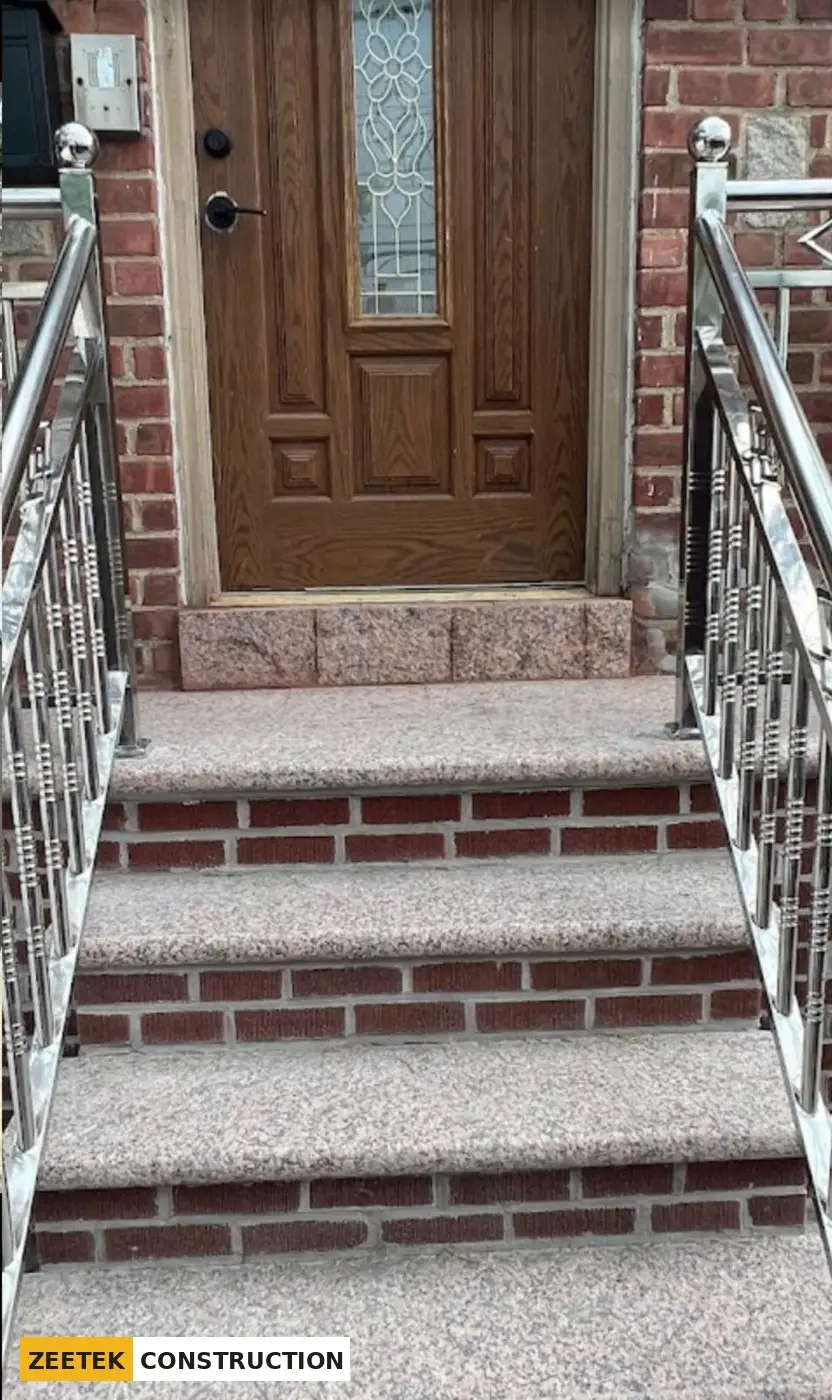
For granite treads, new railings or a full rebuild, see the photos below. For the brick and stone parts of a stoop or areaway wall, our masonry and brick pointing page explains the repair.
Steps and the sidewalk together
Steps often meet the public sidewalk, and the two fail together: water from the steps undermines the flags, and a lifted flag at the bottom step is a trip hazard. If the sidewalk in front needs work too, doing both in one job saves a second mobilisation. See sidewalk repair.
Keep new steps from flaking
New concrete is most vulnerable in its first winter. Our guide to salt damage explains which de-icers to avoid and how to keep a new set of steps sound.
What it costs in NYC
| Work | Our typical range | NYC market range | What moves it |
|---|---|---|---|
| Poured concrete steps, replaced | $405–$810 per step | $450–$900 per step | About 4 ft wide; wider steps cost more |
| Small concrete stoop with landing (3–5 steps) | $2,700–$7,200 | $3,000–$8,000 | Railings, footings and demolition change the total |
| Concrete step repair (patch, nosing, crack) | $270–$810 per job | $300–$900 per job | |
| Brownstone or landmarked stoop | Priced after inspection | — | Materials and Landmarks approval drive the cost |
Our ranges are set about 10% below the typical New York City market ranges published in the cost guides listed here (checked 2026-11-27). City permit fees are passed on at cost and are not discounted. A range is a guide, not a quote: your price is the figure on your free written estimate, which lists every item and what it excludes. Market sources: Angi, poured and precast concrete steps cost, HomeGuide, concrete steps cost, LatestCost, front stoop replacement cost.
From our jobs


Where we do this work
Our crews work in all five boroughs from our base in the Bronx. Each borough page explains what is different about its streets, houses and paperwork:
- Steps and stoops in the Bronx — The Bronx is our home borough: our office is on Olinville Avenue in 10467.
- Steps and stoops in Queens — Queens is house country: nearly four in five lots with a building are one- and two-family homes.
- Steps and stoops in Brooklyn — Brooklyn has the oldest building stock of the outer boroughs and the most walk-up and mixed-use buildings in the city.
- Steps and stoops in Manhattan — In Manhattan the sidewalk is mostly in front of apartment buildings, storefronts and townhouses, owned by boards, landlords and managing agents.
- Steps and stoops in Staten Island — Staten Island is the borough of detached houses: more than nine in ten lots with a building are one- and two-family homes, and most were built after 1940.
Questions we get asked
Should I repair my concrete steps or replace them?
Repair when the steps are solid and level and the damage is on the surface: a chipped nosing, a spalled tread, a crack that is not moving. Replace when the steps rock, have pulled away from the house, are crumbling through, or keep cracking in the same place. Those signs mean the footing or the structure has failed.
Why have my steps pulled away from the house?
Usually the steps settled because their footing was too shallow or sat on loose fill, so frost and water moved them. The gap then lets water in, which makes it worse. A lasting fix means rebuilding on a footing below the frost line, not filling the gap.
Can you repair a brownstone stoop?
Yes. Brownstone stoops are often a stone or brick structure with a brownstone facing, and repairs have to match. In an LPC historic district, stoop work can need Landmarks Preservation Commission approval before it starts. We check the district and the stoop's construction before we price.
How long do new concrete steps take?
Demolition and forming take a day or two for a typical set of front steps, then the concrete needs time to cure before it is used normally. We plan safe access to the house while the work is going on and give you the dates in writing.
Can you add or replace railings?
Yes. Railings are anchored into the new concrete or into sound masonry, not into crumbling edges. We include them in the estimate when they are part of the job.